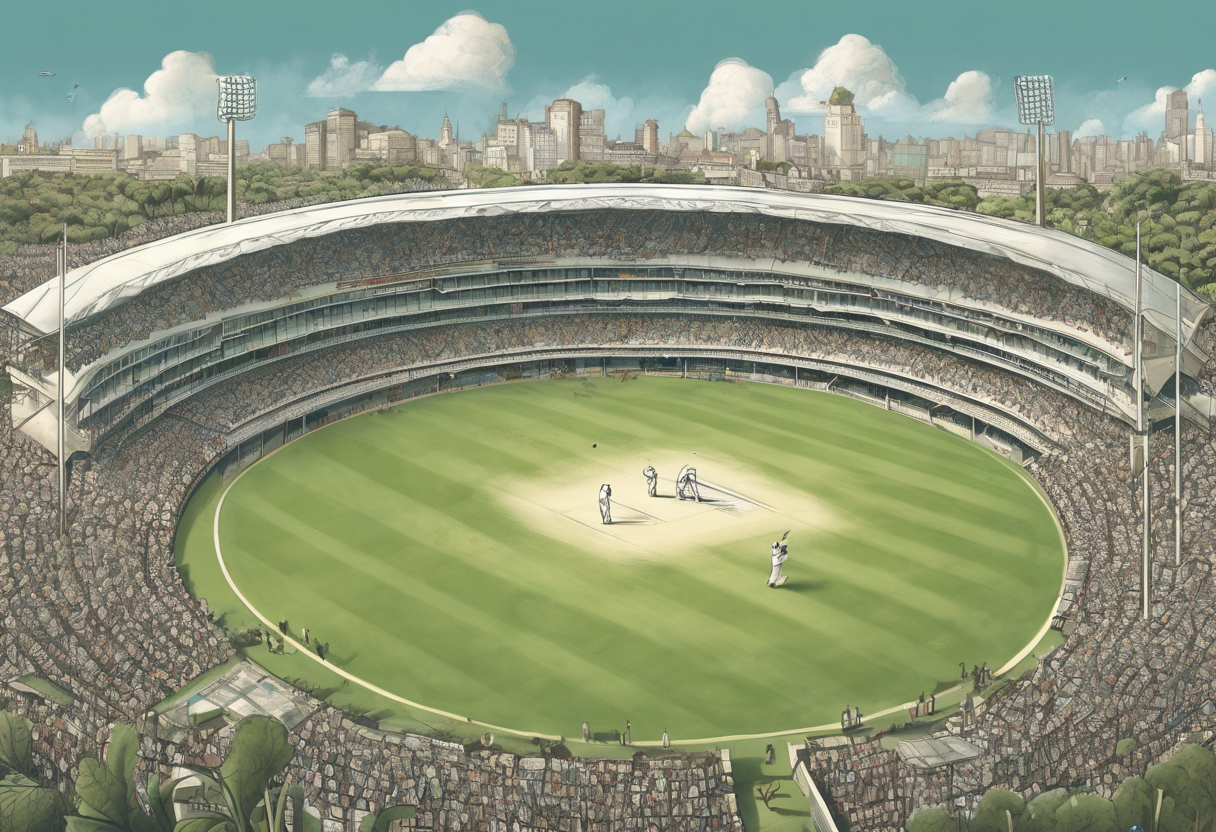
The Evolution of Cricket Grounds: From Traditional Fields to Modern Stadiums
Cricket is one of the oldest sports in the world, dating back to the 16th century. And while the rules of the game have largely remained the same, the cricket grounds have undergone significant transformations over the years. From simple, grass fields to grand, state-of-the-art stadiums, the evolution of cricket grounds is a fascinating journey that reflects the growth and popularity of the sport itself.
In the early days of cricket, matches were played on natural grass fields, which often had uneven surfaces and were prone to damage due to weather conditions. As the sport gained more popularity and attracted larger crowds, dedicated cricket grounds were built, with the first one being the Lord’s Cricket Ground in London, established in 1814. These grounds featured basic amenities such as stands and pavilions, but remained mostly open-air and had a traditional appeal.
But with the rise of modern technology and the increasing commercialization of cricket, the demand for bigger and better stadiums grew. The 1980s saw the introduction of floodlights, allowing for night matches and extending the playing hours. This led to the construction of enclosed stadiums, such as the Melbourne Cricket Ground (MCG) in Australia, with a capacity of over 100,000 spectators.
Today, cricket grounds are not just venues for matches, but also serve as entertainment hubs with multiple facilities like restaurants, bars, and even shopping areas. The development of technology also plays a major role in the modern amenities of cricket grounds, with features like giant screens for replays, live scoreboards and instant Hawk-Eye technology for decision reviews.
The journey of cricket grounds from humble fields to modern-day stadiums is a testament to the evolution of the sport and its growing popularity worldwide. As the sport continues to evolve, we can only imagine what the future holds for cricket grounds.